September 29, 2026
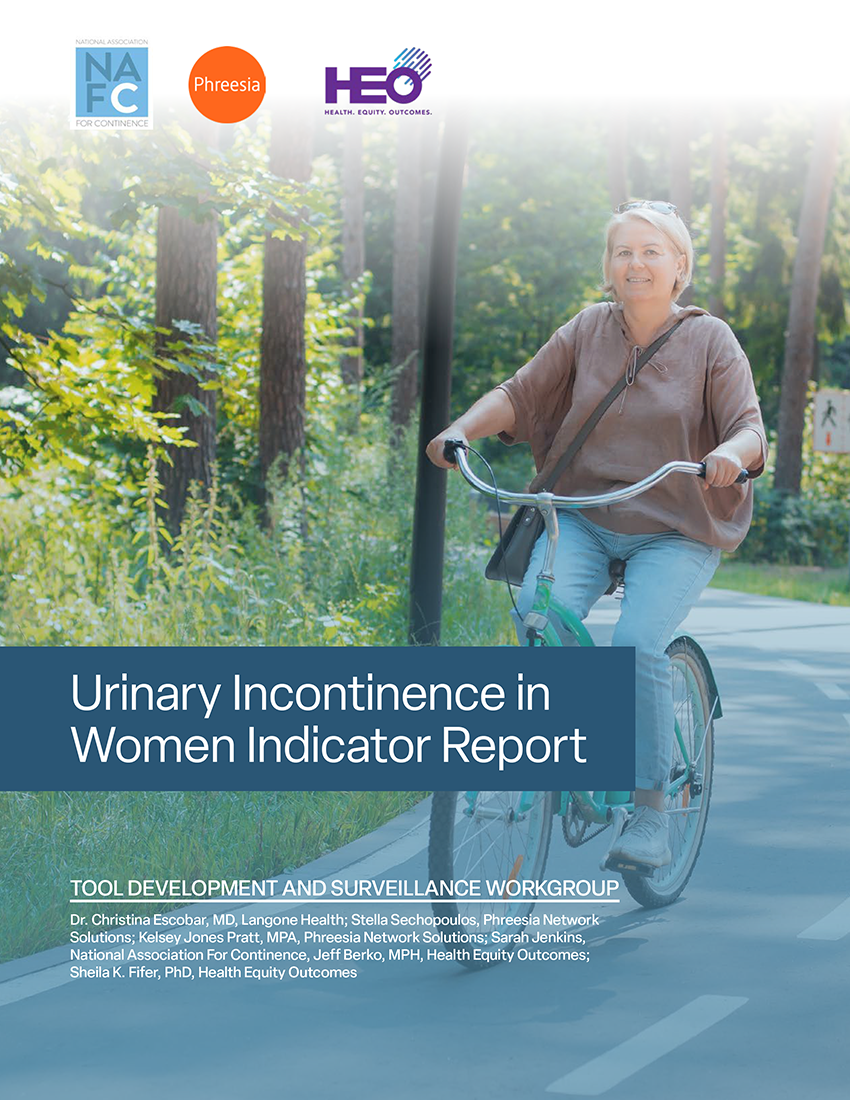
Urinary incontinence (UI) affects an estimated 67–80 million women in the United States. Often thought of as a normal part of aging, it remains underdiagnosed, undertreated and underdiscussed, even when symptoms significantly affect daily life.
Published by the National Association For Continence (NAFC) with Phreesia, Health.Equity.Outcomes., and Christina Escobar, MD, urogynecologist at NYU Langone Health, this chronic condition indicator report is the latest resource from their joint project funded by the Centers for Disease Control and Prevention.
Drawing on current clinical evidence and a new survey of 2,787 women, the report explores:
- The prevalence of UI and the risk factors behind it
- The physical, emotional, social and financial burden on individuals
- Screening recommendations, evaluation strategies and validated questionnaires
- The diagnostic process and testing options available to clinicians
- Treatment approaches for UI, including noninvasive therapies, physical therapy, medications and surgical interventions
The survey, conducted by Phreesia and the NAFC between February–March 2025, points to a conversation gap rather than an awareness gap. More than half (53%) of symptomatic, undiagnosed women have never discussed their condition with a healthcare provider, even though most (61%) report moderate or severe symptoms. By the time the conversation happens, quality of life is often already deeply affected.
Download the report to see how see how healthcare communicators and public health leaders can reach women earlier with practical education that moves them from managing symptoms alone to getting diagnosed and treated.
Acknowledgment of Federal Funding: This report contains current information gathered by field experts in conjunction with the National Association For Continence (NAFC) and the Centers for Disease Control and Prevention (CDC). This report is supported by the Centers for Disease Control and Prevention of the U.S. Department of Health and Human Services (HHS) as part of a financial assistance award totaling $1,125,000 with 100% funded by CDC/HHS. The contents are those of the author(s) and do not necessarily represent the official views of, nor an endorsement by CDC/HHS or the U.S. Government.