BLOG POST

Trusted, empathetic education delivered at the point of care transforms cancer screening anxiety into measurable preventive action.
When Marianne Pearson turned 50, she did what many people promise themselves they’ll do: she scheduled her colonoscopy.
At the time, 50 was still the recommended starting age for colorectal cancer screening (guidelines have since changed, and today, screening is recommended beginning at age 45). Pearson had just started a new role as Vice President of Cancer Care at the Colorectal Cancer Alliance. She wasn’t aware that she had any risk factors, she felt healthy, and the appointment wasn’t promoted by symptoms or concern. It was simply something she knew she should do as part of preventive care.
But what was supposed to be a routine screening resulted in the discovery of stage 1 rectal cancer.
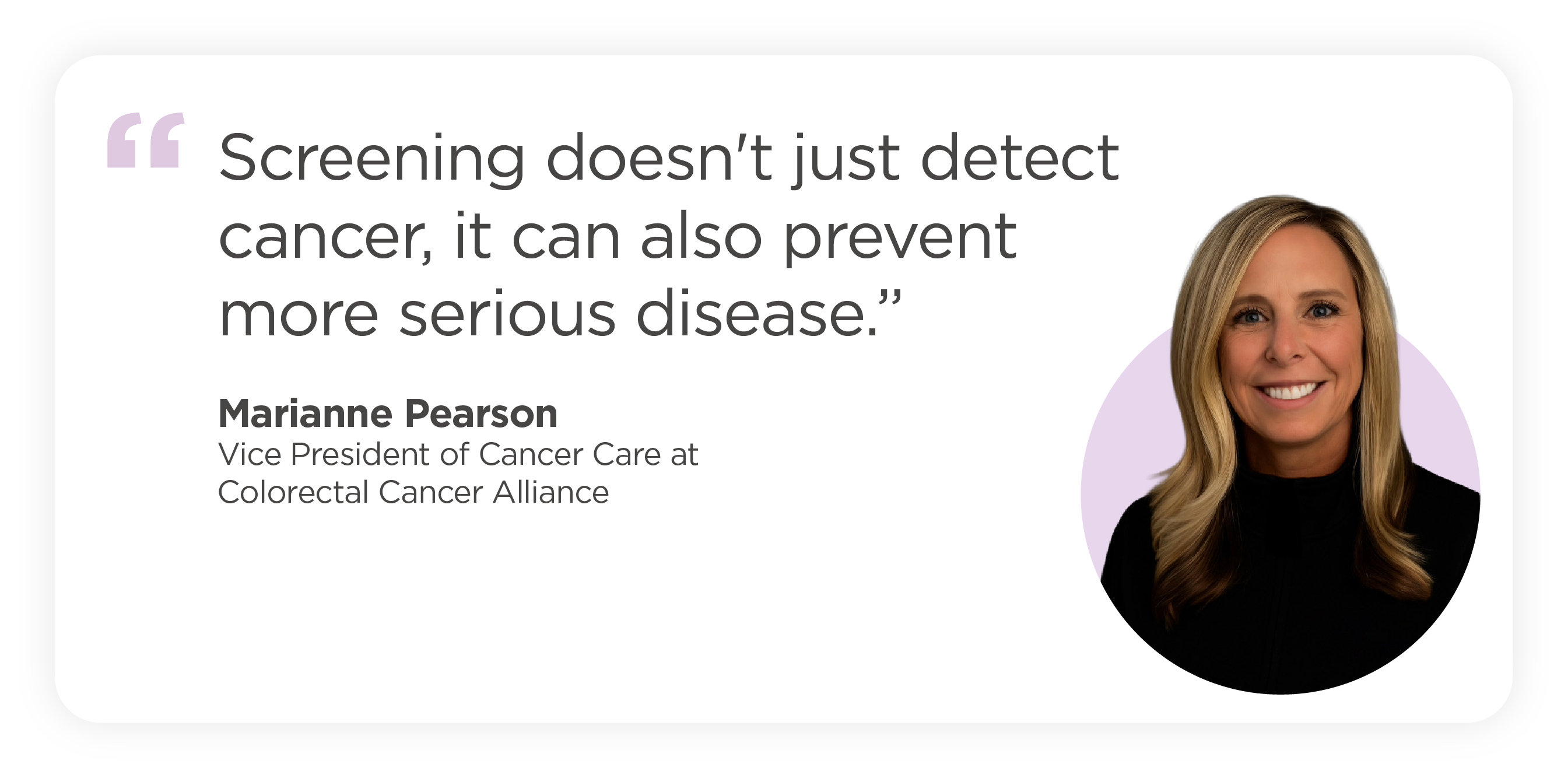
Because it was caught early, the cancer was removed right away. Her treatment was surveillance rather than chemotherapy or radiation. Pearson’s outcome was dramatically different than it would have been if she’d waited months or years to get screened. “Screening doesn’t just detect cancer, it can also prevent more serious disease,” Pearson said.
Few diseases highlight the importance of prevention as strongly as cancer. The statistics underscore the urgency: cancer is the second-leading cause of death in the U.S., killing almost 1,700 people every day. Breast, lung and bronchus, prostate, and colorectal cancers account for roughly half of all new cancer diagnoses. But, if detected early, these cancers can be treated before they spread.
We know screening and early detection save lives, yet millions of Americans delay or avoid recommended cancer screenings each year. According to the Prevent Cancer Foundation’s 2025 Early Detection Survey, 73% of U.S. adults report worrying about cancer screenings. Among them, 36% worry about finding out they have cancer. These concerns span demographics, cancer types and risk levels, underscoring that screening anxiety is widespread.
These fears are not irrational. Screening carries psychological weight and introduces the possibility of life-changing news, physical vulnerability and financial uncertainty. But the risks of skipping timely screenings are far graver.
For healthcare organizations, advocacy groups and oncology marketers, this means finding new ways to reach patients and help alleviate their anxiety about screening. Traditional awareness campaigns alone may not be enough.
Naming the real barriers to cancer screening
Many of the barriers to cancer screening have little to do with a lack of information and everything to do with emotion.
- Patients fear results and “making it real.” Screening transforms hypothetical risk into potential confirmation. “Avoiding screening doesn’t prevent cancer,” says Sue Friedman, Executive Director of FORCE (Facing Our Risk of Cancer Empowered). “It only makes it more likely that the cancer won’t be found until you’re experiencing symptoms you can’t ignore. Getting screened gives you power. Waiting takes that power away.”
This fear can be further amplified for individuals at risk of hereditary cancers. For many people, genetic testing for hereditary cancers raises concerns for immediate family members and children. The thought “What if I pass this on?” compounds anxiety because it is a question one must carry for life.
- Patients worry about discomfort and embarrassment. Even when screenings are potentially lifesaving, awkwardness, stigma and misunderstandings still keep many people from taking the next step. Consider, for example:
- Nearly 69% of adults say they would rather file their taxes than get a colonoscopy. “There’s a real stigma around colorectal health,” Pearson says. “Depending on someone’s gender, culture and societal norms, this part of the body is very private and not openly discussed. When it comes to colorectal health, those conversations just aren’t reinforced in a way that feels normal or socially acceptable.”
- Almost 70% of men mistakenly believe that prostate cancer screening starts with a rectal exam. Nearly half of unscreened men say they would be more likely to talk to a provider if they knew the first step is actually a blood test.
- Many women avoid Pap smears due to stigma, fear or embarrassment.
- Many patients—especially those with a history of smoking—delay screening for lung cancer, fearing they will be blamed or shamed for their illness.
- Patients are concerned about cost and access. About 25% of adults worry about unexpected out-of-pocket expenses, and confusion about what insurance covers only adds to the hesitation.
While most preventive cancer screenings are covered by insurance, the financial impact often goes beyond the test itself. Patients may need to take time off work, arrange transportation or pay for childcare to attend an appointment. For people without paid leave or flexible schedule, even a short medical visit can mean lost income.
Some patients also worry about the potential costs that could follow a screening. If results come back abnormal, additional tests, specialist visits or treatment may follow. For many households already living paycheck to paycheck—nearly 44% of Americans say they would struggle to cover an unexpected $1,000 expense from savings—the possibility of additional medical bills can feel overwhelming. The uncertainty around those downstream expenses lead some people to delay care even when the screening itself is covered.
Normalizing screening as a standard part of staying healthy
For many patients, screening feels like a high-stakes event rather than a routine health behavior. But evidence shows that when screening is framed as a normal and empowering part of staying healthy, more people take action. For example, IQVIA Digital, the Prevent Cancer Foundation and Phreesia Network Solutions collaborated on an initiative to educated women about the risks of breast cancer and benefit of timely screening. Digital education, delivered right before doctor appointments, motivated 5,396 women who had never been screened before to undergo breast cancer screening or diagnostic testing—a 12% increase over those who did not see the educational message.
For brands and advocacy groups working in the oncology space, making deliberate choices about tone, context and delivery in messages about screening can make a meaningful difference.
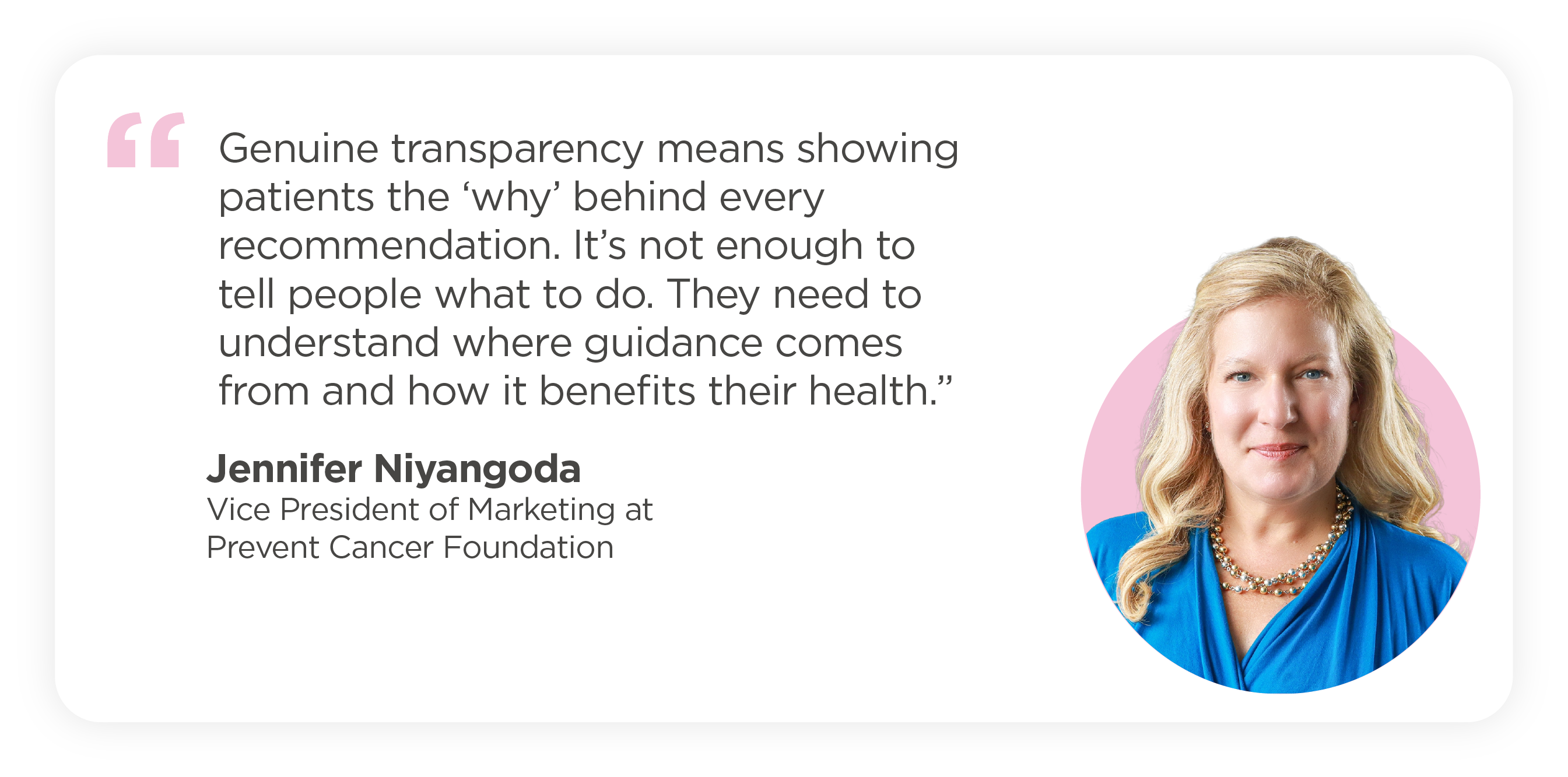
- Organizations should acknowledge patients’ fear. Patients know screening can reveal hard news. When organizations avoid that reality, they hurt their credibility. “Genuine transparency means showing patients the ‘why’ behind every recommendation,” says Jennifer Niyangoda, Vice President of Marketing at the Prevent Cancer Foundation. “It’s not enough to tell people what to do. They need to understand where guidance comes from and how it benefits their health.”
- Organizations should use an empowering, non-alarmist tone. Fear-based messaging can raise awareness, but it can also reinforce avoidance. Patients often respond best to communication that is based on facts and solution oriented. To build trust, organizations should deliver science-backed recommendations in language that feels clear and approachable, not alarmist or overwhelming.
- Campaigns should normalize screening as a part of routine preventive care. The more it feels like brushing your teeth every day or getting an annual physical, the less emotional weight it carries. “It goes back to normalizing this as part of your health,” Pearson says.
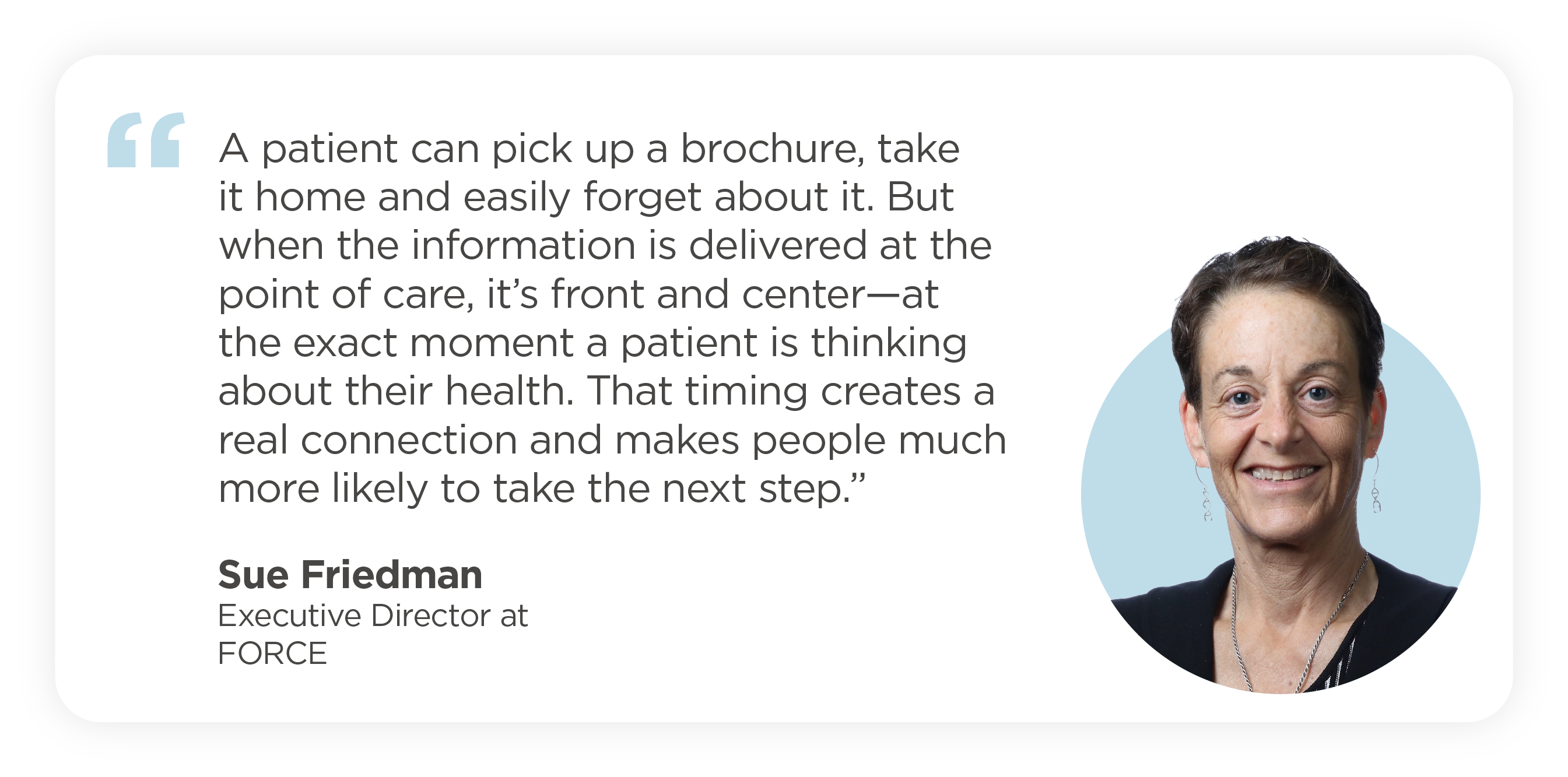
- Organizations should deliver education in a trusted clinical setting. The most appropriate place to inform patients about screening is a trusted clinical setting, when patients are already thinking about their health. “A patient can pick up a brochure, take it home and easily forget about it,” Friedman says. “But when the information is delivered at the point of care, it’s front and center—at the exact moment a patient is thinking about their health. That timing creates a real connection and makes people much more likely to take the next step.”
Effective messaging about cancer prevention works
When educational messaging about cancer prevention is delivered thoughtfully at the point of care, we’ve seen that screening rates go up. Here are some of the results from Phreesia-delivered campaigns1:
- In a breast cancer awareness campaign, more patients chose to take action on screening. Among women new to screening, we saw:
- 34% more patients complete a breast cancer screening within the first 30 days
- 12.5% more previously unscreened or 2+ years overdue patients get screened
- 28% more patients aged 65+—those at highest risk—get screened
- In a campaign encouraging lung cancer screening among individuals 50-80 years old with a history of smoking, more patients started conversations and took steps toward diagnosis:
- Patients were 244% more likely to discuss screening with their doctor compared to Control
- Patients were 182% more likely to complete a screening compared to Control
- In a campaign to drive colorectal cancer awareness and intent to screen, patients experienced meaningful shifts in awareness and motivation:
- 36% of patients said they were very likely to search for screening info (29% higher than Control)
- 51% of patients said they were very likely to talk to their doctor about getting screened (13% higher than Control)
- 24% of patients reported that the information they saw was mostly or all new to them
The common thread across these campaigns is not fear. It is relevance, credibility and delivery within a trusted clinical moment, when patients are most receptive and most ready to act.
What oncology brands and advocacy groups can do
Oncology brands and advocacy organizations can help develop educational resources that go beyond building awareness and encourage patients to take action that is beneficial for their health. Patients may understand that cancer screenings exist and may even be aware that screenings save lives, but without emotional assurance and clear steps, they may not take the key step of getting screened.
It is vital for organizations to build trust carefully and deliberately, through clear language, empathetic tone, credible context and timing that aligns with when patients are already thinking about their health.
Screening fear is real, but it is not inevitable. When fear is met with empathetic and evidence-based education at the right time, patients are more likely to take action, and organizations can earn their trust by becoming steady, supportive partners in prevention.
Learn how Phreesia Network Solutions can help your organization deliver credible, empathetic education and drive more preventive screenings at the point of care.
1 Internal data from Phreesia’s PatientConnect campaigns.