
Traditional HCP marketing often fails to align with real-world clinical decision windows. Phreesia’s ProviderConnect aligns life sciences messaging to real patient appointments and near-term clinical moments, with a privacy-first approach that helps brands engage clinicians when it matters most.

Much of healthcare marketing still treats past prescribing behavior as if it is the cleanest and most dependable signal of future clinical need. That’s because claims data is structured, familiar and measurable, and it can be segmented by specialty, geography and volume. Even when refreshed in real time, however, it remains a lagging indicator because it reflects patients who have already been seen. It tells you what was done, not what is about to be needed. 

Take early spring, for example, when respiratory viral season winds down. Many clinicians felt the shift before any quarterly report captured it. Schedules that were packed with “cough,” “fever” and “shortness of breath” begin to change. In primary care and hospital medicine, the focus moves from acute infections and exacerbations to post-viral complications, medication lapses and chronic disease catch up. A clinician who escalated inhalers or prescribed antivirals in January may now be reassessing maintenance regimens and stabilizing patients whose chronic conditions were destabilized over the winter. The specialty has not changed; the cognitive task has. Past prescribing patterns rarely capture that pivot in real time. 

The challenge: Retrospective data is misaligned with the next decision window 

Prescribing data can help describe broad utilization patterns. At the point where care decisions are actually made, the data are often clinically thin. The “why” behind a prescription is nuanced, patient panels are dynamic and the absence of a prescription may reflect access barriers more than clinical preference. Most importantly, historical encounters do not reliably predict what will appear on next week’s schedule. 

Consider a few common realities: 

  • Referral and network flows shift quickly: Shifts in payer contracts, referral patterns or staffing changes and patient mix can look different within weeks. Prescribing history rarely keeps pace with those transitions. 
  • Disease progression and life events alter clinical trajectories: Patients age into new risk categories, develop comorbidities, experience side effects, lose insurance or stop medications. The next visit is shaped by what has changed, not what was prescribed before. 
  • Access friction distorts prescribing signals: Formularies, prior authorizations and affordability influence what gets written and filled, meaning prescribing often reflects feasibility rather than preference.  
  • Scope of practice is broader than assumed: At the same time, many clinicians function broadly within their field, especially in underserved areas, further widening the gap between past utilization and future need. 

Of course, there are certainly clinicians whose scope is narrower, such as highly subspecialized physicians or advanced practice clinicians focused on one slice of care, so one would not expect their prescribing habits to change. But even highly subspecialized clinicians are not immune to this mismatch. Guidelines evolve, indications expand, safety evidence shifts monitoring requirements and therapies move within treatment algorithms. A clinician who did not prescribe a therapy last year may be precisely the clinician who needs updated information now because the evidence or eligibility criteria changed. 

This is the core problem: if information does not connect to the patients clinicians are about to see, it competes with everything else and is often deprioritized. When it aligns with an active decision window, it has a far greater chance of being considered and applied. 

The solution: Move from historical proxies to appointment-informed relevance 

A more clinically aligned approach begins with a simple reframing: future need is driven by upcoming encounters. If the goal is to support care decisions, the most meaningful signal is not what a clinician prescribed in the past, but what that clinician is preparing to manage next. 

For life sciences organizations and media partners, this is not just a messaging challenge. It is a data strategy challenge. If audience models are built primarily on retrospective claims and prescribing data, then even advanced AI is optimizing against a historical snapshot. The model may be precise, but it is precise about yesterday. 

Clinical readiness is forward-looking. It is visible in scheduled appointments, visit types and condition-level context that signal what a clinician is preparing to address in the near term. Information related to upcoming encounters offers a fundamentally different input into targeting models. They shift audience construction from inference based on prior behavior to alignment with imminent care. 

Many solutions emphasize point-of-care engagement and workflow integration. Those approaches matter. The question is how “the moment that matters” is defined. If engagement occurs only after a patient is already in the room and a decision is underway, the opportunity for preparation is limited. When content aligns with upcoming appointments, it can support clinical thinking before the visit begins. 

In practical terms, that means educational resources can surface as clinicians review schedules, prepare for follow-ups and anticipate therapeutic decisions. It means information about updated guidelines, new indications or access pathways can be encountered when there is still time to shape a plan rather than react to one. It allows clinicians, nurse practitioners, physician assistants and pharmacists to proactively consider monitoring needs, cost implications and patient counseling before a prescription is written. 

For broad-scope clinicians, this is especially relevant. The cognitive load of modern practice is not simply keeping up with one therapeutic area but managing multiple conditions in compressed timeframes. A single morning can include asthma management, anticoagulation decisions, diabetes intensification and evaluation of new neurologic symptoms. Historical prescribing patterns do not reflect that variability. Their schedule does. 

The opportunity: Relevance that aligns with clinical care 

Clinicians do not need more content. They need information that arrives when it is clinically useful. 

Appointments are shorter and administrative burden is heavier. The pace of medical advancement continues to accelerate. Across care teams, the bottleneck is not exposure to information. It is relevance at the moment of decision. 

When engagement aligns with real decision windows, brands are not simply increasing impressions. They are increasing the likelihood that information is absorbed, discussed with patients and translated into action. That alignment requires signals that reflect what is about to happen in practice, not just what has already occurred. 

Past prescribing behavior will always tell part of the story, but it is a story about yesterday. Clinical need is shaped by what is next: the upcoming visits, the patients about to be seen and the decisions that will be made in the near term.  

Explore how ProviderConnect enables life sciences organizations to shift from historical proxies to future-informed HCP targeting, using privacy-safe data tied to upcoming appointments to engage clinicians when readiness is highest. 


Alicia Cowley, MD, MBA, is an internist and Medical Director at Phreesia. 

Traditional HCP marketing often fails to align with real-world clinical decision windows. Phreesia’s ProviderConnect aligns life sciences messaging to real patient appointments and near-term clinical moments, with a privacy-first approach that helps brands engage clinicians when it matters most.

As a clinician, keeping up with medical advances and applying new information in real time during increasingly short visits is incredibly challenging.

During the workday, our clinical decision making is driven by tools that help us move quickly and safely. We react to questions that arise in the moment, which might mean checking UpToDate for the latest evidence-based recommendations, using OpenEvidence to sanity-check a question that comes up mid-visit or referencing updated organizational protocols when a workflow changes. As a hospitalist, I often jumped between checking anticoagulation dosing for a new pulmonary embolism, confirming an antibiotic regimen for a drug-resistant pneumonia or making sure a heart failure plan reflects current standards.

Then, in the more quiet professional moments, we try to fill in our knowledge gaps. Our ability to recognize less-familiar conditions, understand where new or evolving therapies fit into practice and weigh how they compare to existing options depends on that discovery time. We skim email digests from publications like JAMA or NEJM and click through to full articles that are relevant to our practice or pique our interest. We attend conferences. We compare notes with our colleagues to discuss less-common presentations or new therapies that might help the next patient we care for.

Not surprisingly, those off-clinic moments also include being marketed to.

Sometimes the information we see feels relevant. Often times, it reflects what we needed a while ago, not what we will need next.

The challenge: Marketing doesn’t time up well with real-world care and upcoming clinical needs 

In medicine, timing is not a marketing preference. It can determine whether a condition is diagnosed earlier, whether therapy is intensified before complications occur or whether a patient experiences preventable delays. When these windows are missed, they may be missed for months or longer, until the HCP sees the patient again.

Consider a few examples: 

  • Rare diseases: When HCP awareness of a condition is low, the critical moment is rarely prescribing. Its pattern recognition and diagnostic suspicion across the range of clinicians a patient with a rare disease may see before receiving the correct diagnosis. Education delivered too early is easy to forget and hard to apply. Education delivered too late can contribute to delayed recognition, with potential downstream consequences for patients.
  • Progressive chronic disease: Many chronic conditions follow a predictable arc. There is often a window when intensifying therapy can prevent irreversible damage, hospitalization or long-term complications. If that window is missed, the conversation shifts from prevention to intervention. Education that surfaces when a patient is approaching a treatment threshold may support more informed and timely clinical decision making.
  • Therapies with complex access: For many advanced therapies, identifying the right patient is only the first step. Eligibility criteria, baseline testing, prior authorization documentation and specialty pharmacy coordination can delay treatment if the care team is not prepared. When clinicians approach the visit with those requirements in mind, they can order the right tests, document appropriately and initiate access steps sooner, shortening time to therapy.
  • New guidelines and new indications: Adoption of new guidelines or therapies takes time. What changes practice is not a single impression. It is credible information that builds trust and arrives when the clinician is managing a patient who could benefit.

In each of these cases, awareness alone is not enough. Proximity of that awareness to a real clinical decision is what gives information its power.

Yet historically, much of HCP engagement has been optimized for consistency of presence rather than alignment with decision windows. The assumption has been that reach and repetition build familiarity, and that familiarity influences prescribing behavior.

However, clinicians operate in constant triage, managing immediate clinical risk, taking care of documentation and administrative burdens, and coordinating across teams and settings. Information that does not connect to the patient in front of us—or the patient we’re about to see—is therefore deprioritized.

Over time, repetition without context becomes background noise. Even strong, clinically sound content can lose impact if it consistently arrives outside the moments when it can influence care. 

The solution: Elevate clinical timing from a variable to a strategy 

Arguably, the most meaningful shift HCP marketing can make is to treat timing as a primary driver of relevance rather than a secondary consideration—an idea which finally, thanks to advances in AI, is starting to become a reality. This does not require marketers to abandon lists or throw out their playbook. It just requires viewing through a lens of how HCPs really work. It means moving from presence to preparedness.

Presence asks: “Have we been visible enough?”

Preparedness asks: “Are we showing up when a clinical decision is approaching?”

It feels different when information surfaces in proximity to a patient encounter. It feels supportive rather than interruptive and aligns with active thinking rather than competing for attention. And importantly, it’s possible to still keep privacy at the center while delivering information with patient-level relevance.

In practical terms, elevating timing can mean: 

  • Delivering diagnostic education when clinicians are about to see patients with relevant symptom profiles 
  • Surfacing therapy differentiation as patients approach intensification thresholds 
  • Equipping care teams with access and reimbursement information before prescribing decisions are finalized 
  • Reinforcing new clinical data when clinicians are actively managing eligible patients 

The same message delivered at two different times can have dramatically different effects. Outside a decision window, it may be ignored. Within one, it may meaningfully shape care. 

The opportunity: Less noise, greater impact and more meaningful engagement

When engagement aligns with real clinical moments, the experience improves for both clinicians and brands. For clinicians, the benefits are immediate: 

  • Reduced cognitive noise 
  • Greater perceived relevance 
  • Information that supports decisions rather than distracts from them 

When messaging feels connected to real patient care, trust strengthens. Engagement feels intentional and respectful of workflow. For brands, the upside is not subtle: 

  • Brand interactions feel purposeful rather than promotional, strengthening long-term credibility with clinicians 
  • Engagement shifts from volume-driven impressions to moments that influence real-world decisions 
  • Investment becomes more efficient as impact is measured by clinical alignment, not just reach 
  • Commercial growth is fueled by sustained trust and consistency, not intermittent exposure  

In recent market research among HCP marketers, 67% of respondents reported they are not currently using any solution to reach HCPs based on recent or upcoming appointments. That statistic underscores the opportunity. Much of the industry still invests heavily in backward-looking exposure while clinical care operates in forward-moving decision windows. 

When timing becomes central, marketing becomes more aligned with how medicine is actually practiced. When that happens, engagement becomes less disruptive, more valuable and ultimately more supportive of patient care.

Learn more about how Phreesia’s ProviderConnect aligns life sciences messaging to real patient appointments and near-term clinical moments, with a privacy-first approach that helps brands engage clinicians when it matters most. Read Phreesia’s ProviderConnect press release

Alicia Cowley, MD, MBA, is an internist and Medical Director at Phreesia. 

Rare disease outreach is most effective when it starts before diagnosis, using symptom-based point-of-care engagement to reach patients earlier and reduce missed awareness opportunities.

For rare disease brands, reaching patients has never exactly been simple. Patient populations are tiny, often scattered across the country and hard to identify. Awareness of rare diseases is low, not just among patients, but among healthcare professionals who may go their entire career without seeing a single case. Most traditional marketing models weren’t built for this reality.

On top of that, timing makes everything harder. Many rare disease journeys start years before a condition is ever named, long before diagnosis-based audience definition can do any real work. When marketing waits for a confirmed diagnosis, brands miss a long stretch of uncertainty where patients and providers are actively searching for answers.

If brands want to make an impact earlier, rare disease awareness must start before a diagnosis has been made. That means reaching people based on symptoms and early care-seeking behaviors, as well as showing up at moments when patients are open to receiving information. If patients are able to begin treatment at this earlier stage, this may improve their chances of having better health outcomes.

The hidden gap in rare disease awareness

Many rare disease marketing strategies are built around confirmed diagnoses. From a planning perspective, that makes sense. Diagnosis codes are familiar and measurable. But the reality for patients is much more complicated.

Patients with rare conditions often spend, on average, more than five years cycling through symptoms, appointments and misdiagnoses before reaching the right answer. Early symptoms are frequently nonspecific—fatigue, unexplained chronic pain, recurring infections, gastrointestinal issues—and easily attributed to more common conditions. During this journey, many patients will see six physicians or more, but even through a series of medical visits, specialist referrals and tests, they may not get clear answers.

For marketing teams, this creates a major gap. When awareness efforts focus only on diagnosed patients, they risk excluding patients who are actively seeking care but haven’t yet been diagnosed. These undiagnosed patients are often still trying to understand what they’re experiencing and how to describe it to providers.

The limits of diagnosis-based education

Traditional marketing strategies struggle to solve this problem: How do we reach patients who are searching for answers, but don’t yet have a diagnosis that makes them identifiable?

Of course, “expanding reach” is easier said than done. If marketing teams cast too wide of a net, they risk inefficiency. But if they narrow their focus too early, they can exclude those patients who might benefit from education.

The question then becomes: How can rare disease brands reach patients with relevant symptoms?

Meeting patients at the point of care

One answer lies at the point of care. Patients are already engaged, focused on their health and preparing to speak with a provider. It’s a moment of heightened relevance, and one that doesn’t rely on a confirmed diagnosis to be meaningful.

By meeting patients at the point of care, brands can align education with why patients are there in the first place, even if they don’t have a diagnosis.

Information delivered at the point of care can shape how patients think about their symptoms, what questions they ask and how confidently they engage with their providers in the exam room. Instead of passively consuming awareness messages, patients are empowered to participate in their care and advocate for themselves.

But showing up at the point of care is only part of the equation. How rare disease brands engage patients in that moment matters just as much. Symptom-first engagement doesn’t mean overwhelming patients with disease-state education or suggesting diagnoses before a clinician does. The goal is never to tell patients what they have, but rather to help them articulate what symptoms or issues they’re experiencing.

When done well, symptom-based relevance allows brands to expand reach while building and maintaining trust. Education can focus on helping patients recognize symptom patterns, prepare questions or understand when it may be appropriate to seek further evaluation, all without naming or implying a specific rare disease. This kind of support respects the uncertainty patients are already living with, rather than adding fear or urgency.

Using symptom patterns helps identify patients who are most likely to benefit from guidance, even if they don’t yet have a diagnosis. It captures the attention of people earlier in their journey, when awareness can still influence the path forward, while also keeping the message supportive and appropriate.

By engaging symptom-based audiences at the point of care, rare disease brands can:

  • Reach patients early in their journey, before years of delay could make the course of treatment more complex
  • Support more meaningful patient–provider conversations
  • Increase the likelihood that concerning symptom patterns are recognized sooner

Rare disease awareness can’t wait for a diagnosis

Rare disease journeys don’t begin with a diagnosis. They begin with confusing symptoms, uncertainty and repeated attempts to find answers; that early window is when patients and providers are actively searching for clarity. By focusing on symptom-based relevance and engaging patients at the point of care, rare disease brands can show up earlier with education that supports better questions, stronger patient–provider conversations and more timely recognition of concerning patterns. Starting awareness before diagnosis isn’t about broader reach, it’s about reaching the right patients sooner, with precision, empathy and purpose.

Rare disease awareness doesn’t have to wait for a diagnosis. Request a demo today to learn how engagement at the point of care can help your brand reach patients sooner and support more meaningful patient–provider conversations.

We sat down with Meg Turco to reflect on her career journey, what it takes to build high-performing teams, and how thoughtful leadership, collaboration and trust drive meaningful outcomes at the point of care.

Leadership shows up in many ways, but the kind that leaves a lasting impression is often felt long before it’s formally recognized. If you’ve worked with Meg Turco—whether as a client, partner or teammate—you know her as someone who brings clarity to complexity, leads with empathy and raises the bar for everyone around her. She’s the kind of leader people trust, seek out and genuinely enjoy working with.

That impact was recently recognized when Meg was named to MM+M’s 40 Under 40, an honor celebrating rising leaders shaping the future of healthcare marketing. For those who know her work, the recognition felt less like a surprise and more like a well-deserved spotlight moment.

We sat down with Meg to reflect on her career journey, what it takes to build high-performing teams, and how thoughtful leadership, collaboration and trust drive meaningful outcomes at the point of care. It’s also a look at the culture and values that make Phreesia Network Solutions a place where people can grow, lead and do work that truly matters.

Phreesia Network Solutions (NS): Congratulations on being named to MM+M’s 40 Under 40. What did that recognition mean to you personally and professionally?

Meg Turco (MT): Personally, it was a moment to pause and actually take it in. This industry moves fast, and most days you’re focused on what’s next. It’s been so nice to have a moment to look back at what we’ve built as a team. Professionally, it reinforced that leadership doesn’t have to look one specific way. You can be direct and empathetic. Strategic and scrappy. Results-driven while still putting relationships at the center. That balance is something I care deeply about, and it’s meaningful to see it recognized in this space.

NS: When you think about your career journey so far, what experiences or moments do you feel most contributed to this recognition?

MT: The biggest contributor has been saying “yes” to opportunities. Some of my most formative moments came from navigating ambiguity—new roles, evolving client needs or scaling teams in fast-moving environments. Working at the intersection of healthcare, media and technology forces you to think differently about how we engage patients, support life sciences partners and measure success beyond traditional metrics. Those experiences sharpen your ability to think strategically while staying grounded in real-world execution.

NS: That path sounds anything but linear. How does that translate into your day-to-day work? Is there even such a thing as a “typical day”?

MT: There truly isn’t a typical day, and that’s one of my favorite parts of the job. Client Experience, the team I lead, sits at the intersection of strategy and execution. You’re constantly balancing big-picture goals with real-time realities all while never being at your desk. It requires flexibility, decisiveness and the ability to shift gears quickly—sometimes and often within the same hour.

NS: Given that constant motion, collaboration must be critical. How does the Client Experience team collaborate with internal teams to bring point-of-care campaigns to life?

MT: Client Experience acts as the connective tissue across teams. We translate client objectives into actionable plans and ensure all internal teams and partners are aligned from the start, not siloed along the way. At Phreesia Network Solutions, that collaboration is especially critical because point-of-care campaigns live in a uniquely complex environment. We are fortunate to have a lot of internal specialist teams, and Client Experience works cross functionally with these teams to ensure that our partners stay at the center: whether that’s collaborating with our creative teams to ensure messaging resonates with each patient, our analytics team to measure performance, or strategy and research teams to optimize based on patient insights and data. The result is more cohesive, effective campaigns—and happy partners!

NS: What’s one misconception people often have about client services in healthcare media?

MT: That it’s just about “managing accounts” or putting out fires. In reality, strong Client Experience teams are strategic operators. We anticipate challenges, shape solutions and help drive long-term growth for both clients and the business. In healthcare media especially, the stakes are high. You’re navigating regulatory considerations, clinical environments and evolving client expectations, all while delivering results.

NS: When Client Experience is operating at that strategic level, it has a direct impact on outcomes. From your perspective, what separates point-of-care campaigns that truly perform from those that fall flat?

MT: The point of care is a moment of heightened attention and a moment that demands respect. The most effective campaigns understand the patient mindset, deliver clear value and integrate seamlessly into the care experience. At the point of care, strong performance comes from aligning on the right message, using data thoughtfully and focusing on what the patient actually needs in that moment.

NS: Performance at the point of care has evolved alongside patient expectations. How have expectations around personalization at the point of care evolved over the past few years?

MT: Expectations have shifted from basic targeting to meaningful personalization. It’s no longer enough to reach the right audience; you have to reach them with the right message, at the right time, in the right environment. Be more thoughtful about how personalization happens. In this context, there’s greater emphasis on transparency, consent and value exchange. At Phreesia, we see personalization as a way to reduce noise and improve relevance and outcomes.

NS: What does strong leadership look like to you in a fast-moving, high-accountability environment like Client Experience?

MT: Strong leadership is clarity, consistency and trust. In Client Experience, things move quickly and the margin for error is small, so leaders need to set clear expectations, make decisions decisively and communicate openly. Just as important is empowering teams and driving accountability. Creating an environment where people feel ownership over their work and confident owning new ideas. Accountability means giving people the tools and support they need to succeed and holding ourselves to the same standard we expect from others.

NS: Leadership also plays a big role in creating space for growth. How does Phreesia support growth, whether that’s developing new skills, taking risks or trying something new?

MT: Phreesia encourages growth by giving people real opportunities, not just theoretical ones. Team members are trusted to take on responsibility early, stretch beyond their comfort zones, and learn through doing. There’s a strong culture of feedback and continuous improvement, which makes it safe to try new approaches and course correct when needed. That combination—support paired with accountability—creates meaningful growth.

NS: With that kind of environment in mind, what types of people tend to thrive on the Client Experience team at Phreesia?

MT: People who are curious, resilient, and FUN. Client Experience isn’t a static role—you’re navigating evolving client needs, the healthcare landscape and cross-functional collaboration all at once, and you’re never doing it alone. The team is incredibly collaborative, so success is shared, not competitive. Because we’re not commission-based, people can focus on solving the right problems for clients and supporting each other, rather than chasing individual numbers. Those who thrive are proactive problem solvers who communicate clearly, take ownership and care deeply about delivering quality work. They’re also the best time ever. Trust me.

NS: Surrounded by that kind of team and work, what ultimately keeps you motivated about the work you do and the team you do it with?

MT: What keeps me motivated is knowing that the work we do has real impact—and that I get to do it alongside people who genuinely care about doing it well. The team brings thoughtfulness, accountability and a sense of ownership to everything they touch, which makes even the hardest days rewarding.

Inspired by Meg’s journey? We’re always looking for curious, driven people who want to build meaningful careers at the intersection of healthcare, media and technology. Explore open roles here.

Point-of-care messaging turns moments of uncertainty in specialty care into opportunities for informed, shared decision making.

As a hospitalist, I cared for patients who were navigating some of the most complex and critical decisions of their lives while being admitted to the hospital. I was the physician coordinating my patients’ treatment plans with the relevant specialists, surgeons and ancillary services, and I was intimately aware that specialty care introduces patients and their families to therapy options that can be intricate, unfamiliar and often deeply personal. 

The challenge: Complexity, choice and communication barriers in specialty care 

Regardless of the specialty, treatment decisions in specialty care frequently involve multiple options, each with distinct trade offs. These choices are rarely straightforward. They require patient understanding, alignment with personal values and sustained engagement. 

Yet that’s precisely where many specialty-care journeys begin to break down. 

Whether they are engaging with specialty care in the hospital or in the clinic, patients often approach specialty care feeling: 

  • Overwhelmed by the sheer volume of new terminology and treatment options 
  • Underinformed about risks, benefits and lifestyle implications 
  • Unprepared to ask the questions that would support a collaborative decision 

And providers—despite our commitment to shared decision making—may struggle to bridge that gap in a hospital encounter or clinic visit, particularly when facing administrative burden, clinical complexity or limited time

This disconnect creates a missed opportunity. Without adequate preparation and support, patients may defer decisions, disengage or default to less optimal care trajectories. 

But the problem isn’t willingness, it’s readiness. And improving readiness is where point-of-care (POC) messaging becomes transformative. 

The solution: Preparation drives informed, collaborative patient-provider conversations 

POC messaging is uniquely positioned to strengthen shared decision making in specialty care by ensuring that patients receive timely, tailored information at the precise moment they’re preparing to engage with their provider. 

Unlike traditional awareness campaigns, which reach patients long before they’re in a decision-making mindset, POC messaging reaches them as they check in for their visit or complete pre-visit workflows. This is a critical window when patients are both receptive to information and able to act on it within minutes. 

1. Personalized POC education prepares patients for meaningful conversations. 

When patients receive educational messages tailored to their condition, treatment options or concerns, they’re far more likely to arrive informed and ready to participate. For example: 

  • Endocrinology 
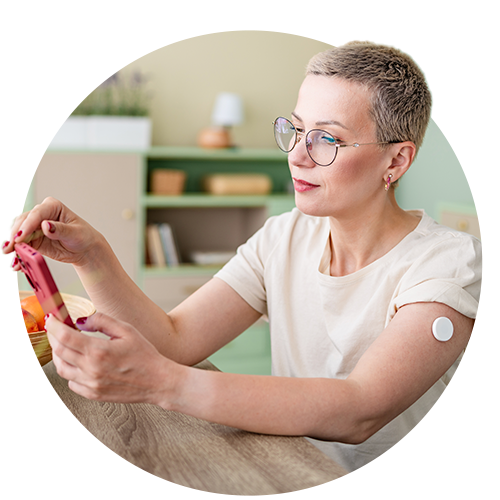
    A patient with diabetes preparing for an endocrinology follow up might receive a short, personalized campaign on insulin delivery options. This could prompt them to ask their provider whether an insulin pump or continuous glucose monitor could help them better understand options for managing their diabetes. That simple nudge can turn a passive visit into an active, collaborative conversation. 
  • Rheumatology 
    Patients evaluating biologic therapies for rheumatoid arthritis often struggle to distinguish between mechanisms of action, dosing schedules and side-effect profiles. Educational POC messaging can help them articulate their preferences, such as a desire for self-injection vs. infusion center administration, making the visit more productive and aligned with their goals. 
  • Gastroenterology 
    For someone with Crohn’s disease choosing among immunomodulators, biologics or combination therapy, POC decision aids can demystify complex care pathways and prompt key questions about long-term management, side effects and monitoring. 

Across therapeutic areas, the principle is the same: POC messaging allows third-party organizations—like life sciences companies, government agencies and advocacy groups—to deliver evidence-based, patient-friendly information that boosts comprehension right when it matters most. 

2. POC messaging bridges the awareness-to-action gap. 

Even highly motivated patients need clear, digestible information to translate interest into action. This is especially true in specialty care, where: 

  • Symptoms may fluctuate 
  • Treatments may be costly or complicated 
  • Risks and benefits must be weighed thoughtfully 

POC messaging helps narrow this gap by providing context that encourages patients to discuss options today, not in the future. 

Specific messages about medication and treatment options to manage heart disease or a hard-to-treat blood cancer don’t replace clinical guidance. They prime the conversation, ensuring that shared decision making is informed not only by clinical evidence and the care team’s knowledge and experience but also the patient’s values, goals, preferences and circumstances. 

3. A POC platform enables personalized, secure and scalable outreach. 

From my vantage point as a medical director at Phreesia, what excites me most is the ability for life sciences companies, government agencies and advocacy groups to reach the right patients with the right message at the right time. 

This is a highly effective strategy for patient engagement that prioritizes consent and privacy, draws on relevant evidence, and aims to improve communication between patients and providers. 

Together, these capabilities help transform a traditionally passive waiting room experience into a moment of activation, education and empowerment. 

The opportunity: Empowering and preparing patients at scale  

We are at an inflection point in specialty medicine. Emerging therapies continue to be more precise, more personalized and more promising than ever before. But their success depends on something profoundly human: A patient who understands their choices and feels confident engaging in shared decision making. 

For life sciences organizations and advocacy groups, POC messaging represents a strategic opportunity to: 

  • Improve patient preparedness 
  • Support more productive and collaborative clinical conversations 
  • Help facilitate appropriate treatment discussions between patients and their clinicians 
  • Advance equity by providing accessible, digestible education across diverse patient populations 

And for direct-to-consumer marketers working with specialty brands the message is clear: 

POC education isn’t just a tactic. It’s a catalyst for shared decision making, and shared decision making is essential in healthcare. 

When patients come to their visit informed, engaged and ready to participate, everyone wins—patients, providers and the healthcare system at large. 

Learn how point-of-care messaging can support shared decision making across your therapeutic areas. 


Alicia Cowley, MD, MBA, is an internist and Medical Director at Phreesia.  

Point-of-care messaging brings pediatric health education into the moments that matter most: when families are already thinking about their child’s care.

I spent most of my high school and college years surrounded by kids—babysitting, carpooling and even nannying for a while. “How hard can parenting be?” I thought. Then my son arrived in 2017, and all that confidence disappeared overnight. Suddenly, I was sending late-night messages on the patient portal and leaving long voicemails for the pediatrician with a running list of “quick questions” after an appointment.

It didn’t matter how many children I had cared for before. Having my own child changed everything. Just when you master one phase—sleep schedules, potty training, school readiness—something new comes along to test your confidence all over again. Parenthood is a constant reminder that we’re all learning as we go.

“One thing I used to tell first-time nervous parents when they came in with their newborns is that my first week at home with my first was the most terrifying week of my life—and I’m a pediatrician! I think this just underscores how hard it is to be a parent,” says Dr. Christina Suh, pediatrician and Director of Clinical Content at Phreesia.

That’s why messaging about pediatric health, particularly point-of-care education, matters so much. Parents and caregivers genuinely want to do what’s best for their kids, but the flood of information, the daily demands of family life and the reality of time constraints often get in the way. Even the most confident parents and caregivers can leave an appointment unsure about what comes next or unclear on what they just heard from the provider.

Delivering trusted, relevant information at the moments families are already thinking about their child’s health helps bridge the gap between what happens in the exam room and what happens at home. It reinforces provider guidance, improves understanding and builds confidence, all in real time.

Parents and caregivers are the gatekeepers of their children’s health

Parents and caregivers are the primary advocates and decision makers for their children’s health. They decide when kids receive vaccinations, screenings and check ups. Their understanding, confidence and engagement directly influence early detection, adherence and long-term outcomes.

But even the most dedicated parents can struggle to access, process and act on information amid the chaos of daily life.

Understanding the daily reality of parents and caregivers

Mornings start early for parents and caregivers, and they rarely go as planned. There are shoes to find, lunches to pack, drop offs to make and a workday waiting on the other side. By the time evening arrives, there’s little room left to think about anything else.

Even the most organized parents can feel stretched thin. Preventive healthcare often competes with more immediate concerns. And when parents do try to find answers, they’re met with an endless feed of information from social media, friends and online forums—some accurate, much of it not.

“As a working mom of two, I know firsthand how every day is a balancing act, between work, school, activities and the endless stream of decisions parents have to make,” says Kelsey Pratt, Director of Market Development at Phreesia. “It’s easy to feel overwhelmed by advice and information coming from every direction.”

Within that reality, it’s easy to understand why even the most engaged parents and caregivers miss opportunities for early detection and prevention. They are:

  • Overwhelmed: Parents are inundated with advice from providers, peers and the internet, and they don’t always know which information to prioritize.
  • Unaware: Parents don’t know what they don’t know. Key recommendations, like developmental screenings, dental care or early allergen exposure, aren’t always top of mind.
  • Protective: Parents want to make the right decisions, and they look for reassurance from trusted sources before acting.
  • Time constrained: Between work and family obligations, few have time to research and sift through guidance to decide which of the conflicting evidence they receive to follow.

To add to the barriers parents and caregivers face when making informed decisions, pediatricians—who are parents’ most trusted source of guidance and information—face their own set of challenges, making this dynamic even more complex.

Supporting providers in balancing care and communication

For pediatricians, every visit is a race against the clock. In a typical 15- to 20-minute wellness visit, pediatricians must cover vaccinations, screenings, developmental milestones and answer any questions from parents and caregivers.

“In every wellness visit, we’re trying to cover an incredible amount, from preventive screenings to growth milestones to the questions parents bring in,” Dr. Suh says. “Even with time constraints, our goal is always the same: for every family to leave feeling heard, supported and confident about their child’s health.”

Meanwhile, parents and caregivers are often multitasking—comforting a child, listening to instructions or mentally adding “stop by the pharmacy” to their to-do list. It’s no wonder that so much vital information gets lost between the exam room and the car ride home.

These overlapping challenges—parents eager to learn but overwhelmed and providers eager to teach but limited on time—point to a clear opportunity: tools that extend education beyond the encounter and outside of the exam room, bridging the communication gap in real, practical ways.

That’s where point-of-care messaging comes in.

Bridging the pediatric knowledge gap with point-of-care education

Point-of-care messaging brings pediatric health education into the moments that matter most: when families are already thinking about their child’s care. It’s digital, personalized content delivered at key touchpoints, such as during check in, sitting in the waiting room or immediately following a visit.

Unlike static brochures or general online searches, digital point-of-care education aligns with the provider’s recommendations and is personalized to the child’s unique needs. It meets families with the right information at exactly the right time,  and rather than adding to a provider’s workload, it enhances and extends their communication by:

  • Focusing the conversation: Point-of-care messaging helps providers and parents zero in on what’s most relevant to the child’s needs, whether it’s developmental milestones, nutrition guidance or advice on behavioral health.
  • Building on trusted relationships: Parents and caregivers view their child’s pediatrician as one of the most credible sources of information. When educational content is delivered at the provider’s office or in the context of an appointment, it carries weight, helping families absorb and act on guidance long after the visit ends.
  • Creating space for reflection: Parents and caregivers are in the right place to request more information after seeing educational content. Then, they can engage with it at their own pace, when they’re most ready to process and act on it.

“Reliable information is essential, but finding it in the middle of everyday life isn’t always easy,” Pratt says. “Point-of-care education meets families where they are, delivering guidance that’s timely, relevant and aligned with what their child needs most. When parents and caregivers feel informed and supported, they’re more confident in the choices they make for their children.”

When point-of-care education is done well, the outcome is clear: better-informed parents and caregivers, stronger adherence to preventive care, and a more trusting relationship between families and providers.

Sesame Workshop: Making health education engaging and trustworthy

Trust is at the heart of every pediatric interaction. Parents and caregivers want information that’s not only accurate, but also comforting and easy to understand, especially when it touches on sensitive topics like emotional or behavioral health. Pediatricians and other providers share this priority; they want to ensure that any content shown to families is based on evidence, trustworthy and reinforces the guidance they provide in the exam room.

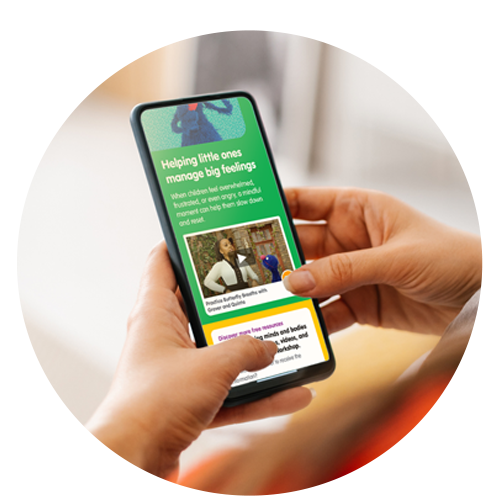
Hands holding an iPhone with the Sesame Street campaign visible on the screen

That’s why Phreesia’s collaboration with Sesame Workshop is such a powerful model for pediatric engagement. Each organization brings unique strengths: Phreesia’s expertise lies in delivering personalized health content at the point of care, while Sesame Workshop excels at crafting age-appropriate, research-driven lessons that resonate with children and families. Together, we combine these capabilities to meet families where they already feel most supported—their pediatrician’s office.

Over the next five years, this collaboration will come to life through joint campaigns on PatientConnect, reaching millions of parents and caregivers as they check in for their children’s medical appointments. These campaigns will feature beloved Sesame Street characters—Elmo, Grover, Big Bird, Abby Cadabby and others—sharing evidence-based messages about preventive care, routine check ups and emotional wellbeing. By turning wait time into learning time, we’re creating a moment of discovery that helps families feel informed and reassured before they even step into the exam room.

Helping parents and caregivers feel confident so kids can thrive

Parents and caregivers play an essential role in their child’s health journey, but they can’t—and shouldn’t—do it alone. Between daily responsibilities, endless advice and limited time with providers, even the most dedicated families need support.

Point-of-care education is the bedrock of that support. It empowers parents and caregivers to understand, trust and act on guidance that supports their child’s wellbeing and development. At the same time, it helps providers reinforce preventive care in ways that are personal, consistent and aligned with each family’s needs.

Interested in seeing how Phreesia can help your organization deliver personalized, evidence-based point-of-care education that supports families and providers alike? Request a demo to discover how our solutions can strengthen patient engagement and empower confident, informed care decisions.

Diabetes drives a cascade of comorbidities across multiple therapeutic areas. When patients consent to use their information, personalized, digital point-of-care education—unlike static materials—empowers patients, fosters provider trust and helps organizations deliver integrated, outcome-driven engagement.

Type 2 diabetes is a chronic condition that does not exist in isolation. In fact, it disrupts nearly every major organ in the body, fueling an expanding cascade of health complications that extend well beyond glucose management. With approximately 38 million Americans living with type 2 diabetes and another 98 million in prediabetic stages, its impact on the healthcare system is profound. Adults with type 2 diabetes have a substantially higher risk of cardiovascular disease, and many cases may be unrecognized until advanced. Up to 50% of adults with diabetes may develop peripheral neuropathy, with prevalence rising with age and duration of disease. Approximately one in three adults with diabetes have chronic kidney disease. Additionally, diabetic retinopathy remains the leading cause of preventable blindness among working-age adults.

These numbers reflect more than clinical complexity. They represent the interconnected nature of chronic conditions. Diabetes accelerates inflammation, damages blood vessels and impairs circulation, all of which heighten the risk of heart attack, stroke, kidney failure, nerve damage and vision loss. For life sciences organizations and patient advocacy groups, this interconnection underscores a strategic imperative: to approach patient engagement holistically and educate patients at the moments that matter most.

The expanding web of comorbidities

Every type 2 diabetes diagnosis creates a chain reaction of potential comorbidities. Patients treated for diabetes also need cardiovascular care, kidney function testing, regular foot exams and vision screening. Roughly 70% of adults with diabetes have high blood pressure, and 30–60% of individuals with diabetes have dyslipidemia. Older adults with diabetes are at a higher risk of cognitive decline, and older adults with uncontrolled diabetes are at an increased risk of Alzheimer’s disease and vascular dementia.

Organizations that recognize this overlap can design engagement strategies that reflect the realities of multiple long-term conditions. Instead of addressing each condition in isolation, effective campaigns weave together messaging that connects the dots between conditions, helping patients see how one health decision affects multiple outcomes. This improves patient understanding, builds credibility and trust, and supports meaningful conversations between patients and providers.

Attention meets action at the point of care

The point of care represents a powerful moment to influence a patient’s awareness and behaviors. It’s where patients are already thinking about their health, open to guidance and poised to make decisions.

Digital point-of-care education goes far beyond what static waiting room wallboards or brochures can offer. Those materials rely on one-size-fits-all messaging that assumes every patient’s journey looks the same. In contrast, personalized digital content reaches patients with evidence-based information that aligns with their unique health profile and risk factors, making it exponentially more relevant and actionable. When patients see educational messaging that reflects their concerns, providers can build on that engagement to spark meaningful conversations during appointments because their patients are better prepared to ask questions and are more likely to be receptive to a treatment plan.

When executed well, point-of-care education can:

  • Reveal the connection between chronic conditions (e.g., diabetes and cardiovascular risk)
  • Encourage medication adherence and preventive care through timely, actionable content
  • Strengthen the provider–patient relationship by supporting informed dialogue
  • Position organizations as trusted allies in patient wellbeing

Integrating education across therapeutic areas

Traditional health education often operates in silos, with separate messages for cardiology, nephrology, ophthalmology, hepatology or endocrinology. But this doesn’t reflect reality: patients with diabetes rarely have the luxury of focusing on a single diagnosis. A patient living with diabetes may also be juggling hypertension, obesity and neuropathy simultaneously, navigating multiple care teams and treatment plans.

Forward-thinking organizations are breaking down these silos through integrated, data-driven approaches that align messaging across specialties. By using the digital point of care, organizations can coordinate outreach across therapeutic areas, ensuring that a message about diabetes can also reinforce related kidney health or cardiovascular wellness. This type of coordination mirrors how care is best delivered in the real world: holistic, collaborative and centered on the patient.

But integration alone isn’t enough. To truly resonate with patients juggling multiple conditions, education must go beyond coordination. It must also feel personal. Tailoring outreach to each patient’s unique health journey transforms unified messaging into meaningful information that drives patient action.  

Phreesia’s research underscores the importance of personalization: More than 9,200 patients surveyed after check in said they want personalized resources that reflect their health needs. In fact, more than four in five patients said they value receiving new, relevant information about medications or therapies tied to their condition.

Personalized content isn’t just more engaging, but it’s also more effective at influencing behavior. For example, a patient with diabetes receiving a prompt about eye health may be reminded to schedule a retinal screening, while another patient at risk of heart disease learns how improving glucose control supports cardiovascular resilience.

This kind of tailored education does more than increase awareness—it fosters trust. When patients feel seen and understood, they’re more likely to engage meaningfully with their providers, ask informed questions and adhere to treatment recommendations. Life sciences organizations that facilitate these moments of understanding elevate their role from an information source to a trusted partner in patient health.

How Phreesia powers precision engagement

Phreesia enables life sciences organizations and advocacy groups to deliver personalized, relevant education during the digital check-in process, precisely when patients are most focused on their health and ready to act. Through advanced segmentation, real-world data and predictive analytics, Phreesia helps organizations:

  • Reach the right patients at scale, across specialties
  • Deliver education that reflects real comorbidities
  • Reinforce integrated care models that align with provider goals

This approach drives measurable outcomes. By personalizing education and delivering it at the optimal moment, organizations often see improved adherence rates, more proactive patient behavior and stronger engagement metrics across campaigns.

Even beyond diabetes, the principles of point-of-care engagement apply across the healthcare spectrum. Chronic conditions such as obesity, COPD, cardiovascular disease and autoimmune disorders share many of the same challenges: complex comorbidities, fragmented care and inconsistent patient education. Personalized digital engagement bridges these gaps, transforming health information into meaningful patient action.

Organizations that invest in these strategies are better positioned to:

  • Expand reach across comorbid conditions and overlapping patient populations
  • Align with provider communication to enhance trust and credibility
  • Support long-term adherence, prevention and improved outcomes

With chronic conditions with multiple comorbidities, the organizations that lead will be those that connect the dots, embracing digital precision over static messaging, integration over isolation, and empathy over exposure. Those who do will not only drive better outcomes but also redefine what patient trust and engagement look like.

Ready to elevate your patient engagement strategy? Partner with Phreesia to deliver personalized, relevant education that reaches patients when it matters most—at the point of care. Request a demo today and see how precision engagement drives better outcomes for chronic conditions.

We discuss how life sciences organizations can rethink vaccine communication by focusing on the channel and the creative.

In our final video, we explore how behavioral science and choice architecture can be leveraged to instill vaccine confidence. Learn how new players—life sciences organizations, media agencies and more—can make a difference when it matters most.

Catch up on Part 1 or Part 2 of the “Point-of-care playbook to rebuild patient confidence.”

Learn more about how Phreesia can help your organization drive better health outcomes.

We explore how misinformation is reshaping vaccine conversations—and why healthcare providers remain the most trusted source of truth.

As trust in public health institutions declines, patients are turning to their healthcare providers for guidance. In part two of our series, Phreesia experts Christina Suh, Jai Seth, Raquel Langknecht and Shanoor Seervai examine how the provider-patient relationship is becoming central to vaccine confidence—and why life sciences organizations must step up to support these critical conversations. 

Learn more about how Phreesia can help your organization drive better health outcomes.

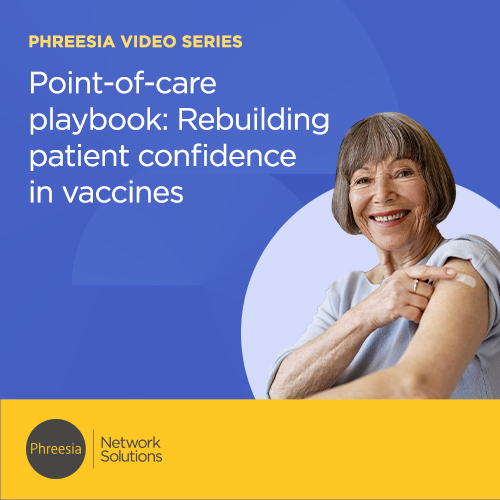
Missed Part 1 of the “Point-of-care playbook to rebuild patient confidence in vaccines”? Watch it here.

Women with endometriosis and PCOS deserve to be heard. They deserve timely diagnoses, compassionate care and clear information.

Approximately 6.5 million women aged 15–44 in the United States live with endometriosis. Another 1 in 10 women of reproductive age are affected by polycystic ovary syndrome (PCOS), and up to 70% of women with PCOS may not even realize they have the condition. These numbers are staggering, but they only scratch the surface of a deeper issue: Too many women are navigating these conditions without a diagnosis, without support and without feeling heard.

Endometriosis and PCOS are complex, chronic problems that go far beyond “just period problems.” They can impact fertility, metabolism, mental health and overall quality of life. Yet, despite their prevalence, these conditions are often misunderstood, underdiagnosed or misdiagnosed, leaving women to manage symptoms that feel confusing, isolating and overwhelming.

More than just period pain

Let’s be clear: Endometriosis and PCOS are not just about cramps or irregular menstrual cycles. They can cause hormonal imbalances, unwanted hair growth, hair thinning, pelvic pain, prolonged bleeding, mood swings, anxiety, depression, weight gain and more. These symptoms often feel unconnected, like the body is sending mixed signals, and because general awareness is low, many women don’t realize their symptoms could be part of a larger health issue.

The lack of awareness is widespread. In a Phreesia survey of more than 2,400 women who had not been diagnosed with endometriosis or PCOS, fewer than 1 in 5 were familiar with either condition. Yet nearly half of these women said their period-related symptoms had a moderate to significant impact on their everyday life, and 40% rated their pain or discomfort between 7 and 10 on a 10-point scale. These findings highlight a critical gap: Many women don’t recognize their symptoms as part of a larger health issue, and as a result, they may not know how—or even that they should—bring them up with their doctor. That missed connection can delay diagnosis, treatment and the support they need to manage their health.

But receiving a diagnosis is just the first step, and while it can bring relief and validation, it often marks the start of a new set of challenges. Phreesia’s research shows that many diagnosed women report that they still don’t feel like they truly understand their condition—what causes their symptoms, how their health may change over time or what management strategies are effective. This uncertainty can impact their daily experience, making it hard to manage their symptoms, make informed decisions and advocate for themselves in healthcare settings.

This gap between diagnosis and understanding is more than a knowledge issue, it’s a daily reality. It affects how women experience their condition, interact with healthcare providers and manage their wellbeing. Addressing this gap is essential for empowering women to take charge of their health and improve their quality of life.

The point of care: A moment that matters

For many women, the journey to diagnosis is long and frustrating. In a survey of more than 1,400 women aged 18–44 who were diagnosed with PCOS or endometriosis, more than half (53%) experienced symptoms for over two years before receiving a diagnosis.

That’s two years of pain, confusion and feeling dismissed.

But there’s hope. The point of care—the moment when women interact with their healthcare providers—can be a powerful catalyst for change. With the right strategies, life sciences organizations and advocacy partners can transform these moments into opportunities for education, validation and empowerment.

Messaging that builds trust

When brands show up with empathy and educational content, they build trust. This messaging can validate women’s experiences, normalize conversations and empower action. Done right, point-of-care messaging doesn’t just inform, it resonates and drives action that could help improve health outcomes.

According to a Phreesia survey of women diagnosed with PCOS, endometriosis and other period-related conditions:

  • 52% said information on common symptoms would have helped them reach a diagnosis sooner
  • 42% wanted to know more about signs and risks
  • 63% found information about treatments and symptom management helpful
  • 52% valued insights into how conditions affect other aspects of health, like fertility
  • 49% appreciated information about related symptoms

These numbers tell a clear story: Informed patients are empowered patients, and empowered patients drive better outcomes.

The role of life sciences and advocacy partners

Life sciences organizations and advocacy partners have a unique opportunity to lead the charge. By investing in point-of-care strategies that prioritize empathy and education, they can help women feel seen, heard and supported.

This isn’t just good marketing, it’s good medicine.

To truly make an impact, these efforts must be personalized and tangible. Educational materials that reflect the lived experiences of women with PCOS and endometriosis—such as symptom checklists, visual guides and patient stories—can help women recognize patterns and feel less alone. Conversation guides designed to foster open, validating dialogue with providers can equip women to ask the right questions and advocate for their health more confidently. Campaigns that destigmatize menstrual health and normalize conversations in waiting rooms, exam rooms and digital platforms can prompt women to speak up and seek answers.

Turn empathy into impact

Women with endometriosis and PCOS deserve to be heard. They deserve timely diagnoses, compassionate care and clear information. Life sciences brands can help make that happen by showing up at the point of care with empathy, education and actionable support.

Whether it’s developing tailored resources, amplifying patient voices or equipping patients with tools for better conversations with their providers, every effort counts. Learn how you can leverage the point of care to close the gap between symptoms and solutions and ensure that no woman feels unheard in her healthcare journey.